
Al-Abbas's Holy Shrine (Al-Kafeel)yesterday
The conclusion of the first day of the Third Specialized Conference on Information and Libraries
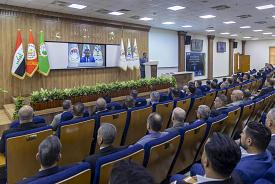
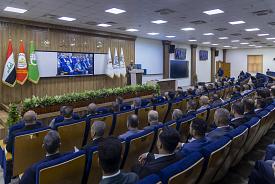
The Department of Intellectual and Cultural Affairs at the Al-Abbas's (p) Holy Shrine concluded the first day of the Third International Specialized Conference on Information and Libraries.
The conference, organized by the Indexing and Information Systems Center and the Center for the Preservation and Maintenance of Manuscript Heritage and Documentary Archives, both affiliated with the Library and Manuscript House of the Al-Abbas's (p) Holy Shrine, is being held in cooperation with Al-Ameed University and in scientific partnership with the College of Artificial Intelligence at the University of Baghdad, as well as the Information and Knowledge Technology Departments at Al-Mustansiriya, Basra, and Mosul Universities. The conference, themed "Knowledge Leadership: Leading the Future," will take place from October 13-15, 2026.
The opening ceremony was attended by Dr. Afdal Al-Shami, a member of the Board of Directors of the Al-Abbas's (p) Holy Shrine, along with several other officials, deans and faculty members from Al-Ameed University, and a select group of researchers and specialists in the fields of libraries and information technology.
The events began with the opening of the electronic library and information exhibition, with the participation of several centers from the Department of Intellectual Affairs, the Central Library of Al-Ameed University, the Umm al-Baneen (peace be upon her) Women's Library affiliated with the Holy Shrine, and a number of publishing and distribution houses.
Dr. Afdal al-Shami, a member of the Board of Directors of the Al-Abbas's (p) Holy Shrine, explained that libraries are no longer merely places for preserving books, manuscripts, and scientific resources. They have become centers for preserving human heritage, disseminating knowledge, supporting scientific institutions, and providing a suitable environment for researchers, students, and intellectuals. He noted that libraries represent the link between knowledge produced across past generations and the knowledge that is constantly renewed to serve human societies.
He emphasized that investing in libraries and developing their services greatly contributes to investing in humanity itself and achieving scientific and cultural development to serve current and future generations. Cataloging, he added, is a fundamental pillar of library work. It is not merely a technical process for organizing books and recording their data, but rather a science and methodology that helps to control and organize knowledge and facilitate access to it in the fastest and most accurate ways.
He added that a successful library is one that can connect users with its resources, references, manuscripts, and documents as quickly and efficiently as possible. Therefore, it is essential to leverage the fundamental transformations brought about by technological advancements, which contribute to the shift from traditional methods to an integrated digital environment that allows access to information resources anytime, anywhere.
The first day included a workshop titled: "The Overproduction of Knowledge Content and the Professionalism of its Management: Challenges and Practices in the Artificial Intelligence Environment," presented by Dr. Naeema Hassan Jabr. The workshop addressed the issue of the overproduction of knowledge content in light of the rapid development of artificial intelligence technologies, and the accompanying challenges related to managing, organizing, and utilizing this content efficiently.
The workshop also touched upon the importance of adopting professional practices that contribute to improving the quality of information and enhancing the effectiveness of its management in knowledge institutions. It also featured a number of insightful contributions that enriched the discussion.
The first day of the conference also featured its first research session, titled "Information Governance, Open Access, and Cataloging," which discussed 15 research papers on information systems and artificial intelligence applications in library management. The session concluded with an awards ceremony honoring the researchers.
The conference aims to highlight the latest smart technologies and artificial intelligence applications in library and information management, discuss mechanisms for the digital and sustainable preservation of Iraqi and Arab heritage, and provide a scientific platform for researchers and academic institutions to exchange expertise and achieve knowledge leadership and shape the future.
More from Al-Abbas's Holy Shrine (Al-Kafeel)
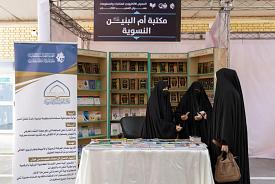 Umm al-Baneen (peace be upon her) Library Participates in the Third Specialized International Conference on Information and Librariesyesterday
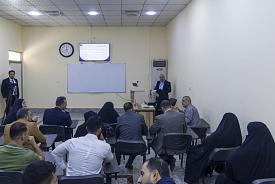 The first research session of the Third International Specialized Conference on Information and Libraries was heldyesterday
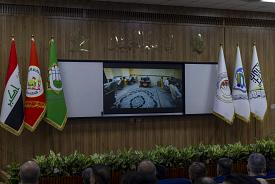 A documentary film about the indexing and information systems center was screened as part of the third specialized international conferenceyesterday
 The Al-Abbas's (p) Holy Shrine launches the activities of the third specialized conference on information and librariesyesterday
Comments (0)
No comments yet.